INS Sindhughosh Decommissioned: A Legacy of Submarine Warfare Ends After 38 Years
A Storied Career in Submarine Operations
INS Sindhughosh, named after the “roar of the lion,” was acquired from the Soviet Union and played a pivotal role in modernizing the Indian Navy’s submarine fleet. Over its lifespan, it underwent multiple upgrades, including integration of advanced sonar systems, Klub-S cruise missiles, and enhanced stealth features. The submarine’s contributions included anti-surface warfare, intelligence gathering, and deterrence against potential adversaries.
Key highlights from its service include participation in Operation Trident during peacetime simulations and joint exercises like Malabar and Varuna. With a displacement of 2,300 tons surfaced and a top speed of 17 knots submerged, INS Sindhughosh exemplified reliability in challenging environments, from the Arabian Sea to the Bay of Bengal.
Strategic Implications of the Decommissioning
This decommissioning aligns with the Navy’s fleet modernization drive, transitioning to advanced platforms like the Kalvari-class (Scorpène) submarines and Project 75I. As India aims for a 18-submarine conventional fleet by 2030, the retirement of older Kilo-class vessels makes way for indigenous builds under Atmanirbhar Bharat. However, it underscores the need to accelerate inductions amid growing threats from China’s expanding submarine presence in the IOR.
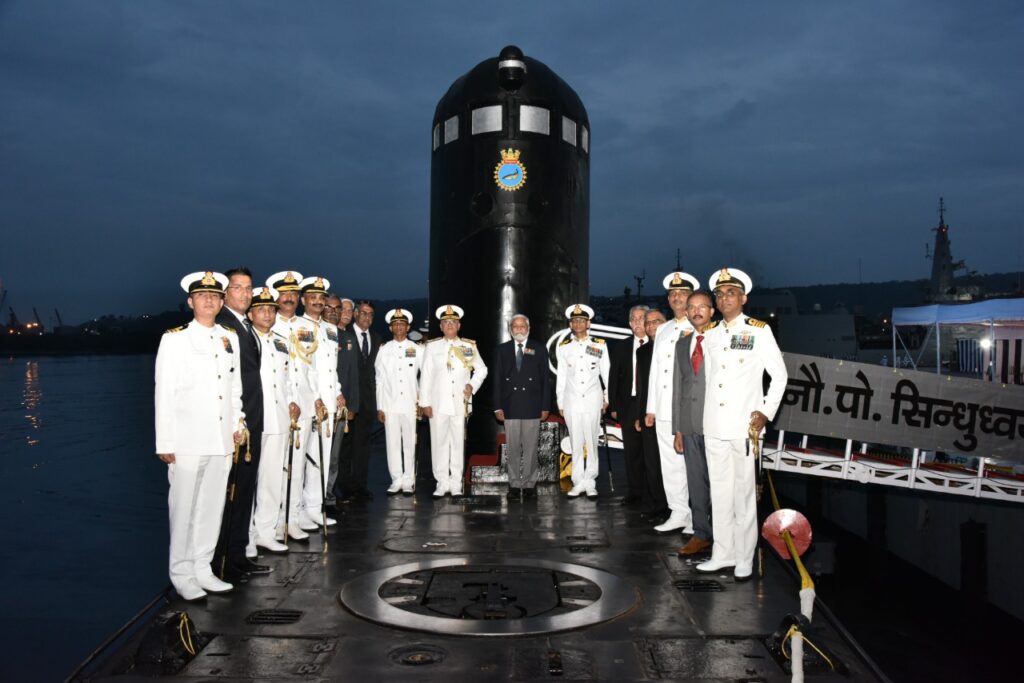
The ceremony at Visakhapatnam featured tributes from naval veterans and emphasized the human element—over 1,000 sailors served aboard, honing skills that will transfer to newer assets.
Future Outlook for Indian Submarine Forces
With eight Kilo-class submarines remaining, the Navy is focusing on life-extension programs and nuclear-powered options like Project 75 Alpha. This move reinforces India’s commitment to blue-water capabilities, ensuring deterrence and power projection in a volatile geopolitical landscape.
Stay tuned to DefenceNiti for more updates on naval advancements.