Putin-Modi Summit 2025: Elevating Indo-Russian Defence Ties Amid Global Turbulence
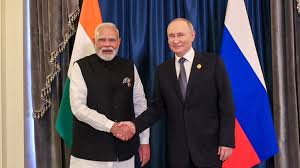
President Vladimir Putin arrives in New Delhi tomorrow for the 23rd India-Russia Annual Summit — the first bilateral visit by a foreign head of state after India’s decisive Operation Sindoor and amid a rapidly shifting global order in the Indo-Pacific. The two-day talks (December 4–5, 2025) are expected to culminate in the signing of a new 10-year Programme of Military-Technical Cooperation (2026–2035), multiple billion-dollar defence contracts, and a significant expansion of joint R&D in fifth-generation fighters, air-defence systems, and hypersonic weapons.
Key Defence Deliverables on the Table
- New 10-Year Military Cooperation Programme 2026–2035 – replaces the expiring 2011–2020 framework extended till 2031
- Su-57E (export) negotiations – India seeking full ToT including AL-51 engine and stealth coatings
- S-500 Prometheus discussions – potential co-development or licensed production for India’s Ballistic Missile Defence Phase-II
- BrahMos-II (K) hypersonic missile – acceleration of joint development and first test in 2027
- Additional 3 Project 11356M frigates – Talwar-class with full Indian weapons suite
- Ka-226T helicopter localisation – 60% indigenous content target by 2028
- Joint production of AK-203 rifles – Korwa plant to reach 100,000 units/year by 2027
Su-57E: The Big Prize
Russia has formally offered India the Su-57E export variant with unprecedented technology transfer — including source codes for avionics, AL-51F1 engine production rights, and stealth material technology. Indian negotiators are pushing for:
- Integration of Uttam AESA radar (GaN) as primary sensor
- Astra Mk2/3 and BrahMos-A as standard armament
- Local final assembly at HAL Nashik
- Co-development of a twin-seat “Su-57I” trainer/strike version
Estimated deal size: $12–15 billion for 114–150 aircraft, potentially making it the largest fighter contract of the decade.
S-500 Prometheus: Shield Against Hypersonic Threats
Post the May 2025 Operation Sindoor, where Pakistan reportedly attempted hypersonic glide vehicle launches (neutralised by S-400), India has fast-tracked talks for the S-500 system. Moscow has agreed in principle to:
- Supply of 3–5 regiments by 2029–2032
- Licensed production of 77N6-N interceptor missiles in India
- Co-development of an Indian variant “S-500I” with DRDO’s PDV Mk2 technology
Deal value estimated at $8–10 billion over 10 years.
BrahMos-II (K): Hypersonic Leap
The summit will formally launch Phase-II of the BrahMos-II (K) hypersonic cruise missile project. Key decisions:
- Target speed: Mach 8+
- Range: 600–800 km (export), 1,500 km for Indian forces
- First test: 2027 from ITR Chandipur
- Production split: 70% India, 30% Russia
The missile will use a scramjet engine co-developed by DRDO and NPO Mashinostroyeniya.
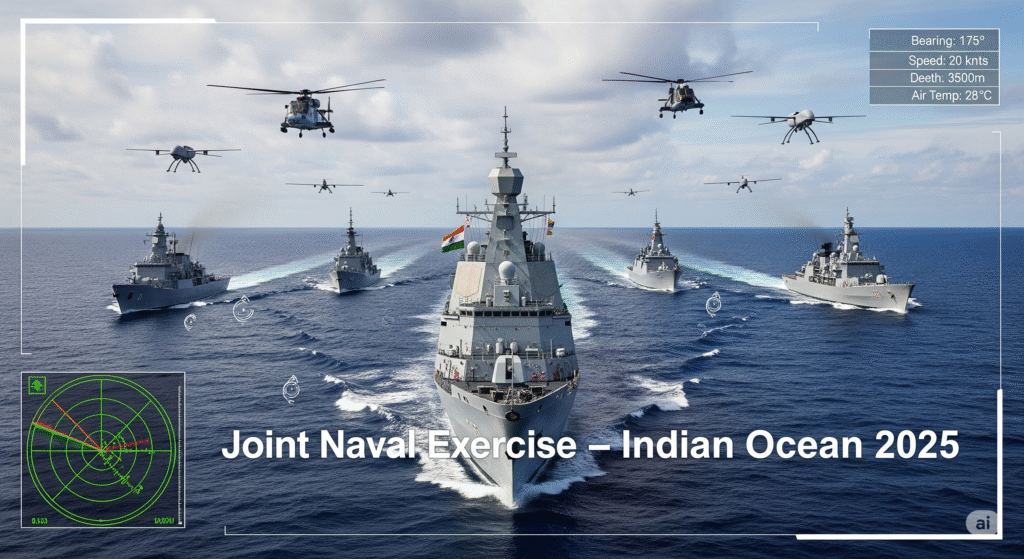
Naval Cooperation: Three More Stealth Frigates
India is set to sign for three additional Project 11356M (upgraded Talwar-class) frigates to be built at Goa Shipyard Limited with Russian assistance. These ships will feature:
- Full Indian combat suite (Barak-8, BrahMos, EL/M-2248 MF-STAR)
- Indigenous gas turbines from Zorya-Mashproekt licensed production
- Delivery: 2029–2032
Balancing Act: Russia, West, and Atmanirbhar Bharat
Even as India deepens ties with the US (Javelin, Excalibur deals), France (Rafale-Marine), and UK (Tempest collaboration), Moscow remains India’s largest defence partner — accounting for 55% of current inventory. The new 10-year programme deliberately avoids exclusivity clauses, allowing India to diversify while preserving privileged access to Russian systems denied to others.
“Russia is not just a supplier but a co-creator of India’s strategic autonomy. In an era of sanctions and technology denial, this partnership remains irreplaceable.” — External Affairs Minister S. Jaishankar, November 2025
Expected Outcomes (December 5, 2025)
- 23 agreements to be signed, 12 in defence domain
- Joint Statement emphasising “special and privileged strategic partnership”
- Roadmap for joint ventures in AI, quantum tech, and directed-energy weapons
- Establishment of India-Russia Defence Innovation Bridge
The summit comes at a time when both nations face Western pressure — Russia over Ukraine, India over diversification — yet their defence relationship has only grown stronger, with bilateral trade crossing $65 billion in 2024–25 and defence exports from India to Russia rising 300% since 2022.
When Putin and Modi meet at Hyderabad House on December 5, they will not merely extend a 70-year-old partnership — they will redefine it for the hypersonic, AI-driven battlefields of the 2030s.
Related Reads on DefenceNiti.com
- India Seals $1.2 Billion Javelin & Excalibur Deal with US – The diversification angle
- Indo-UK Defence Ties Post-CEPA – Tempest vs Su-57 debate
- ET-LDHCM Hypersonic Missile Milestone – India’s parallel hypersonic effort