
2025 as ‘Year of Reforms’: MoD’s Blueprint for Integrated Theatre Commands
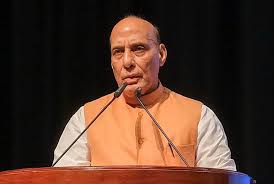
In a landmark announcement on November 26, 2025, Defence Minister Rajnath Singh declared 2025 as the “Year of Reforms” for the Indian Armed Forces – a decisive, time-bound roadmap to transform India into a fully integrated, future-ready military power by 2030. This is not another incremental step: it is the most ambitious restructuring since independence, driven by lessons from Operation Sindoor (May 2025) and the evolving character of warfare in the Indo-Pacific.
The Five Pillars of the 2025 Reforms
The Ministry of Defence has outlined five non-negotiable pillars that will define the year:
- Operationalisation of Integrated Theatre Commands (ITCs)
- Jointness across doctrine, training, and logistics
- AI, quantum, and cognitive warfare integration
- Radical overhaul of defence procurement and indigenisation
- Human resource transformation and cultural change
Pillar 1 – Integrated Theatre Commands: From Concept to Reality
After years of deliberation, the MoD has set an immutable deadline: the first three ITCs will be fully operational by December 31, 2025.
- Northern Theatre Command (Headquarters: Udhampur) – Focused on China (LAC)
- Western Theatre Command (Headquarters: Jaipur) – Focused on Pakistan (LoC & IB)
- Maritime Theatre Command (Headquarters: Karwar) – Covering entire Indian Ocean Region
Two additional commands – Eastern (vs China + Myanmar) and Air Defence Command – will follow by 2027. Each ITC will have a three-star commander from any service on a rotational basis, reporting directly to the Chief of Defence Staff (CDS) General Anil Chauhan.
A new Department of Military Affairs (DMA) directive mandates 100% joint staffing at theatre HQs, with cross-postings of 1,500 officers by March 2026. The National Defence University (NDU) at Gurugram will commence its first integrated course in July 2025 to produce “purple” officers trained for theatre-level operations.
Pillar 2 – Jointness 2.0: Breaking Silos
2025 will witness the merger of 17 single-service logistics nodes into 5 tri-service Integrated Logistics Commands (ILCs) by October 2025. The Andaman & Nicobar Command – India’s only existing theatre command – will be upgraded to full ITC status with permanent Army and Air Force components by June 2025.
“By December 2025, no major platform will be procured unless it is jointly certified by all three services.” – Defence Secretary Rajesh Singh, November 2025
Pillar 3 – Technology Absorption: AI, Quantum, and Cognitive Warfare
The reforms place unprecedented emphasis on emerging domains:
- Creation of a Tri-Service Cyber & Space Agency (TCSA) by April 2025
- AI-driven Integrated Battle Management System (IBMS) to be fielded across all theatres by 2027
- Quantum-secure communication backbone for theatre HQs by 2028
- ₹15,000 crore “Future Warfare Fund” for directed-energy weapons, hypersonics, and autonomous systems
The Defence Artificial Intelligence Council (DAIC) chaired by the CDS will fast-track 180 AI projects identified post-Operation Sindoor, where cognitive warfare and deepfakes played a significant role.
Pillar 4 – Procurement Revolution and Indigenisation Targets
The Defence Acquisition Procedure (DAP) 2025 introduces sweeping changes:
- Negative import list expanded to 5,000+ items
- 74% FDI automatic route for all defence sectors
- Mandatory 60% indigenous content in all new contracts
- Fast-track procurement empowered up to ₹1,000 crore per service vice-chief
Defence exports have already crossed ₹28,000 crore in FY25 and are targeted to reach ₹50,000 crore by 2029 – a five-fold jump from 2022 levels.
Pillar 5 – Human Resource Transformation
The Agnipath scheme will be refined in 2025 with clearer post-service career pathways. Women officers will be eligible for command appointments in all three services from 2026. A new “Defence Civilian Professional Service” will absorb 50,000 specialists in cyber, AI, and space domains over five years.
Budgetary Backing: The Numbers Tell the Story
The capital acquisition budget for 2025–29 has been ring-fenced at $415 billion (₹35 lakh crore), with 68% earmarked for domestic industry – the highest ever. An additional ₹25,000 crore “Reform Implementation Fund” has been created under DMA for infrastructure, training, and cultural change initiatives.
Lessons from Operation Sindoor
The May 2025 precision strikes on terror infrastructure highlighted both strengths and gaps: seamless tri-service coordination in execution, but delays in joint intelligence fusion and logistics. The reforms directly address these gaps, with the CDS empowered to conduct quarterly “Sindoor-type” joint exercises involving all theatre commands from 2026 onward.
Challenges and Resistance
Not everyone is on board. Legacy turf battles persist, particularly around air power allocation to theatre commands. The IAF remains cautious about diluting its asset control, while the Army seeks greater say in maritime operations. The CDS has been given overriding authority to resolve inter-service disputes within 30 days – a first in Indian military history.
A Transformational Moment
As Rajnath Singh declared at the November 26 press conference: “2025 is not just another year. It is the year India stops preparing for the last war and starts shaping the next one.”
By the end of 2025, India will have moved from three separate services to a genuinely integrated fighting force – a transformation that took the United States seven decades after Goldwater-Nichols. If executed with the promised urgency, 2025 will be remembered as the year India’s military finally entered the 21st century.
Related Reads on DefenceNiti.com
- President Murmu Inaugurates Chanakya Defence Dialogue 2025 – Strategic foresight driving the reforms
- Golden Era of Defence Innovation at Swavlamban 2025 – How startups are powering the new ecosystem
- Hyderabad’s SAESI Facility – The silicon backbone of future warfare
- DRDO’s LFRJ Engine DcPP – Industry role in the reformed procurement model